Selected shelf
Reading / Influences
A selective shelf of works that changed how I think about will, mind, living systems, capital, and computation. It is not a complete bibliography or a statement of endorsement.
Will, meaning, and mind
How will, interiority, symbols, self-reference, and distributed processes become a world and a mind.
-

English edition The World as Will and Representation, Volume 1
Begins from the claim that the world appears as representation while its inner reality is ceaseless will.
-

English edition The Phenomenon of Man
Connects evolution, increasing complexity, and the emergence of reflective consciousness.
-

English edition Gödel, Escher, Bach: An Eternal Golden Braid
Uses formal systems, recursion, and self-reference to investigate how meaning and minds emerge.
-

English edition The Society of Mind
Models intelligence as the organization of many limited, interacting processes rather than one central faculty.
Cognition and world models
How attention, reference frames, and networks construct a usable world.
-
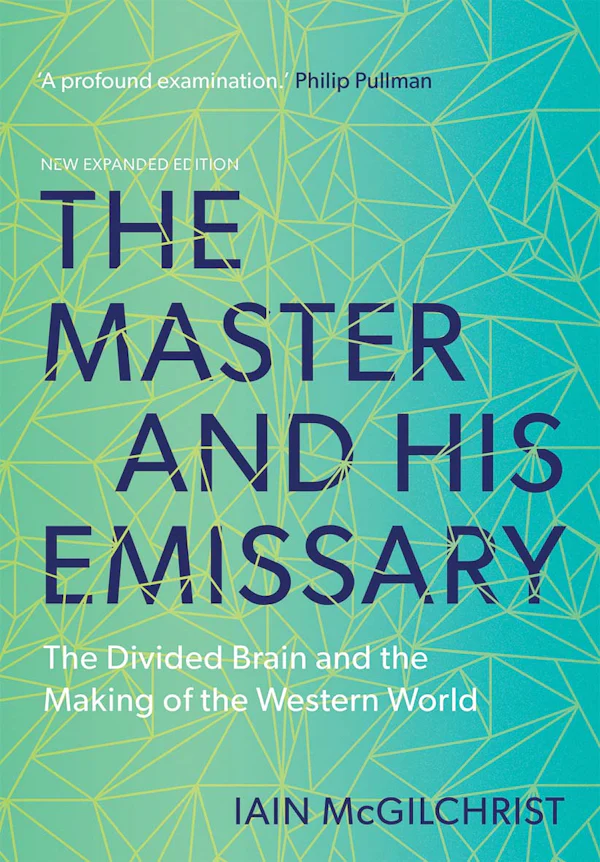
English edition The Master and His Emissary
Examines how distinct modes of attention disclose and organize different versions of the world.
-

English edition Networks of the Brain
Treats cognition as an outcome of structural and functional connectivity across brain networks.
Life, systems, and causality
How living networks, feedback, intervention, and counterfactuals make structure and change legible.
-

English edition Thinking in Systems
Makes stocks, flows, feedback loops, delays, and leverage points available as a practical language of systems.
-

English edition The Book of Why
Separates association, intervention, and counterfactual reasoning into explicit levels of causal inquiry.
Computation and control
How data infrastructure and planetary computation reorganize state, sovereignty, and agency.
-

English edition Designing Data-Intensive Applications
Clarifies the trade-offs among state, consistency, replication, partitioning, and distributed computation.
-
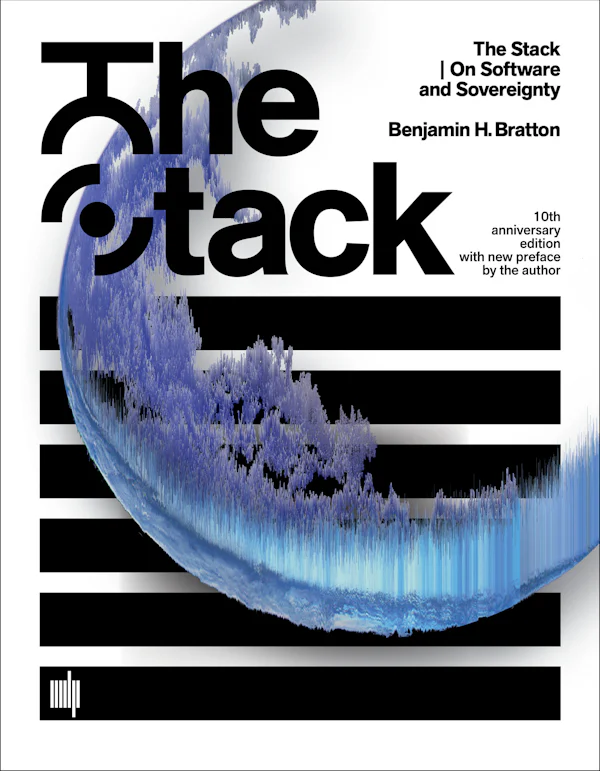
English edition The Stack: On Software and Sovereignty
Reads planetary computation as layered infrastructure that reorganizes sovereignty, territory, and agency.
Capital and institutions
How value, discipline, labor, and accumulation become durable social structures.
-

English edition Capital: A Critique of Political Economy, Volume 1
Treats capital not as a stock of things but as a social relation reproduced through labor, value, and accumulation.
-

English edition The Protestant Ethic and the Spirit of Capitalism
Examines how religious discipline became an institutional ethic for work, calculation, and capitalist conduct.
Science Fiction / Imagined civilizations
Fiction as a space to explore machine judgment, civilizational design, and the conditions of freedom.
-

English edition I, Robot
Explores the gap between giving machines rules and entrusting them with judgment: what those rules mean when they meet human intentions and unforeseen situations.
-

Series selection: Foundation · English edition Foundation series
Sets the ambition to predict and shape civilization against individuals who unsettle its assumptions. A way to examine the reach of social models and what escapes them.
-
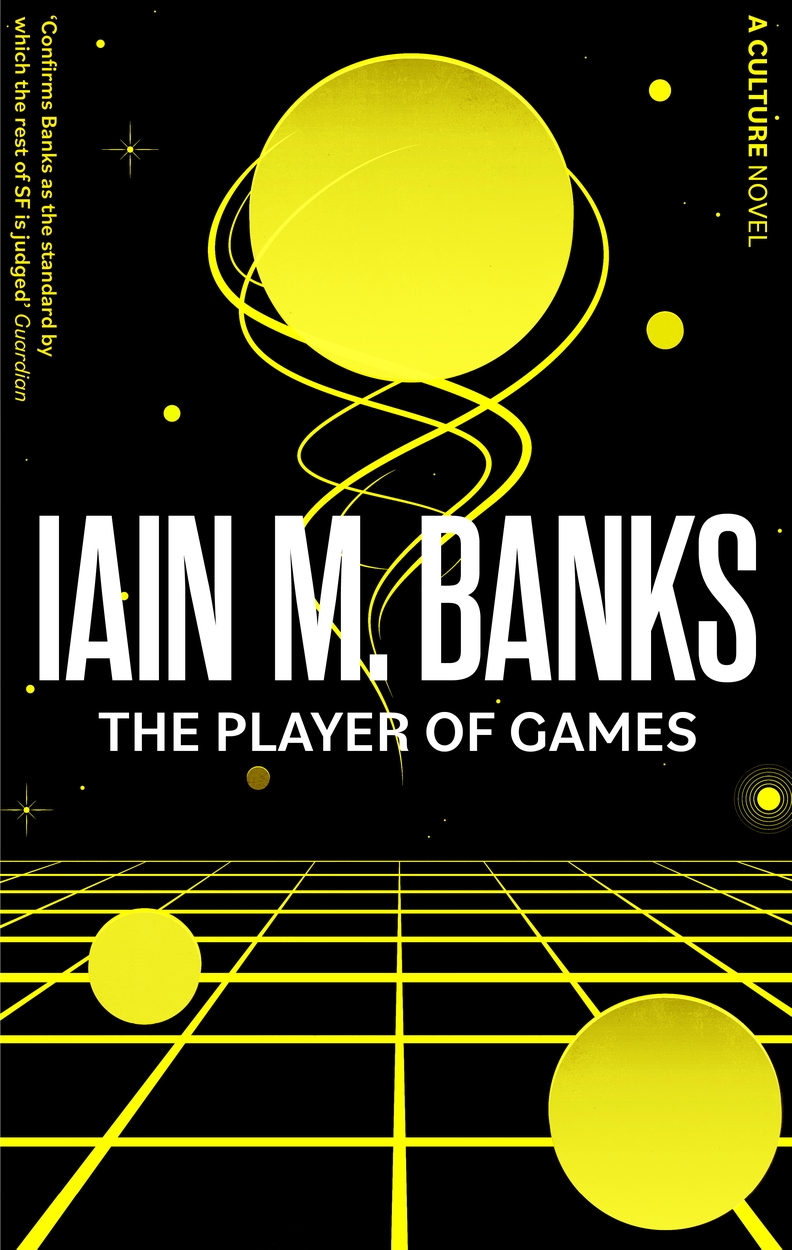
Series selection: The Player of Games · English edition Culture series
Asks what freedom and agency mean when machine intelligence sustains society. It also tests the authority of a civilization that intervenes in others in the name of a better life.
Cover sources: Open Library and publisher catalogues.